
About Webinar Series
Our SCERC Guest Speaker Series will feature students and experts from academia, government, labor, and community organizations who will present emerging research, real-world applications, and policy perspectives in occupational and environmental health.
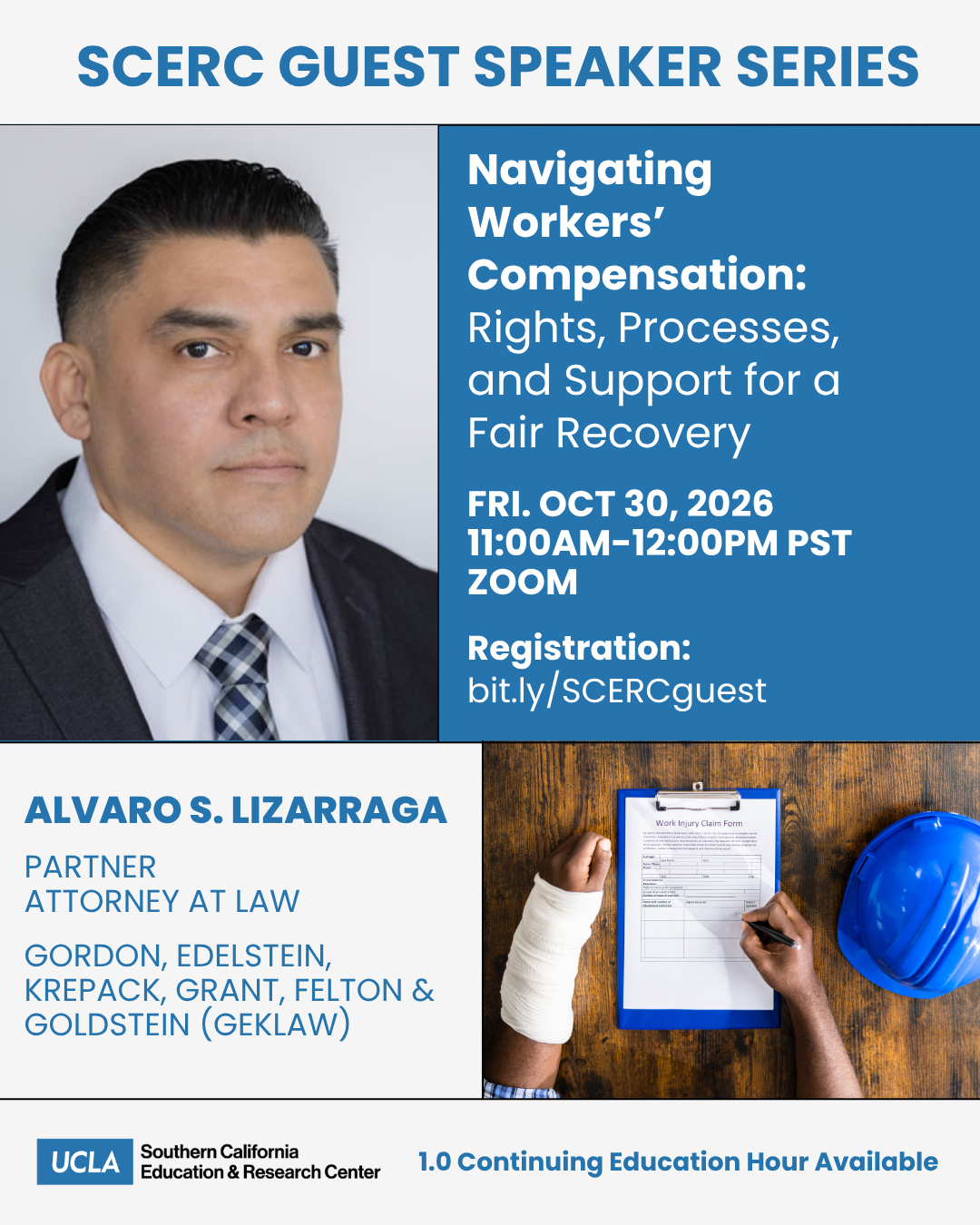
Navigating Workers’ Compensation: Rights, Processes, and Support for a Fair Recovery
Presentation Overview
In this webinar, workers' compensation attorney, Alvaro Lizarraga, will outline the essential steps for reporting workplace injuries, ensuring compliance and timely support for employees. He will cover the types of benefits available through workers’ compensation, including coverage for medical treatment, temporary disability payments, and permanent disability compensation. Additionally, the voucher program for vocational rehabilitation and retraining will be explained, as well as death benefits for surviving family members. The goal of the presentation is to clarify the process and benefits available, empowering both employees and employers to navigate the system effectively. By the end, attendees will understand how to access and utilize these critical protections and know where to seek further resources.
Intended Audience
This webinar is intended for employers, management, health and safety professionals, industrial hygienists, union representatives, worker advocates, workers, students, faculty, researchers, and policymakers.
About the Speaker
Alvaro S. Lizarraga is a Workers’ Compensation Partner with the law firm of Gordon, Edelstein, Krepack, Grant, Felton & Goldstein, LLP. Not only did he work as a paralegal and a law clerk prior to becoming an attorney, but he was also an assistant at a law library and a student representative to an online legal research service.
Mr. Lizarraga is well versed in all phases of case handling, including conducting research, taking depositions, drafting pleadings and negotiating liens. Because he is bilingual he is adept at interpreting case specifics to Spanish-speaking clients.
While earning a Bachelor of Science degree in Criminal Justice Administration from San Diego State University, Mr. Lizarraga served as President of the Criminal Justice Student Association. He graduated summa cum laude.
Mr. Lizarraga has been named a Rising Star among Southern California lawyers. He is a member of the California Applicants’ Attorneys' Association, and is part of that organization’s Latino Caucus Committee.
Continuing Education Contact Hours
- Certified Industrial Hygienists (CIH) may be eligible to earn up to 1.0 contact hour for this event. Visit the BGC CIH Recertification Program for more information.
- Certified Safety Professionals may be eligible to earn up to 1.0 contact hour (0.1 points) for this event. Visit Professional Development Conferences for more information.
- General Continuing Education Contact Hours - 1.0
Webinar Flyer
Presentation Overview Cleaning workers are regularly exposed to cleaning and disinfecting chemicals that can cause acute and chronic health effects. During the COVID-19 pandemic, disinfectant use increased substantially. Cleaning workers, particularly in healthcare settings with heightened infection-control needs, faced increased health risks from greater exposure to disinfectants. Quaternary ammonium compounds (QACs) were the most common active ingredients used in disinfectants for SARS-CoV-2 control. Growing evidence suggests adverse health effects of QAC, but there has been limited human biological research. This presentation covers the impact of COVID-19 on disinfectant exposure, symptom experience, and perceptions among cleaning workers. Also, recent study findings on the effects of QAC exposure on urinary biomarkers of oxidative stress and the gut microbiome are presented. |
|---|

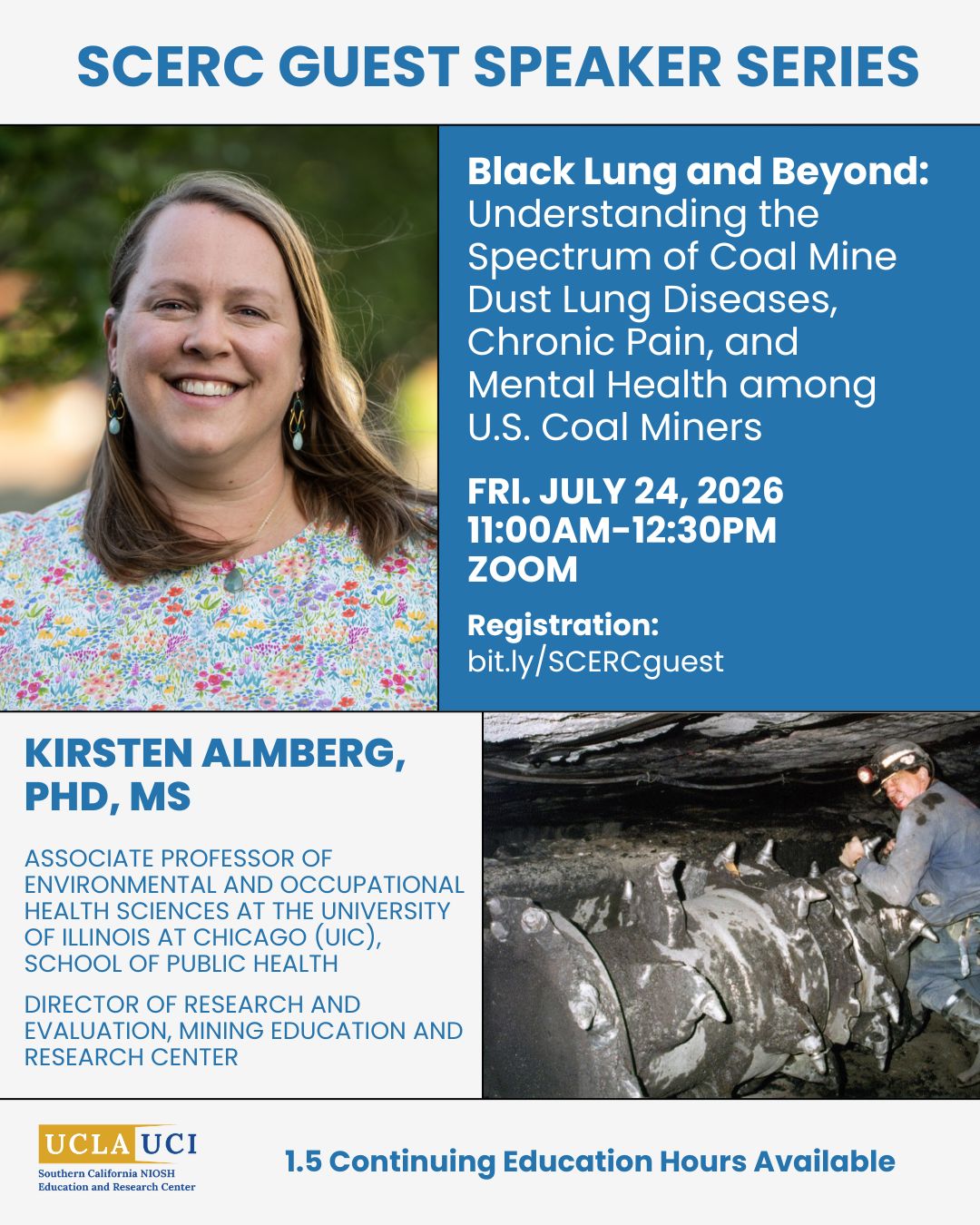
Presentation Overview In this webinar, Dr. Kirsten Almberg covers not only the most current radiographic and lung function data from our nation’s coal miners, but discusses more recent studies from the University of Illinois Chicago’s Mining Education and Research Center that expand our traditional understanding of the health consequences faced by U.S. coal miners. The webinar covers those conditions considered coal mine dust lung diseases, but also discusses recent studies of pain and mental health among coal miners. |
|---|
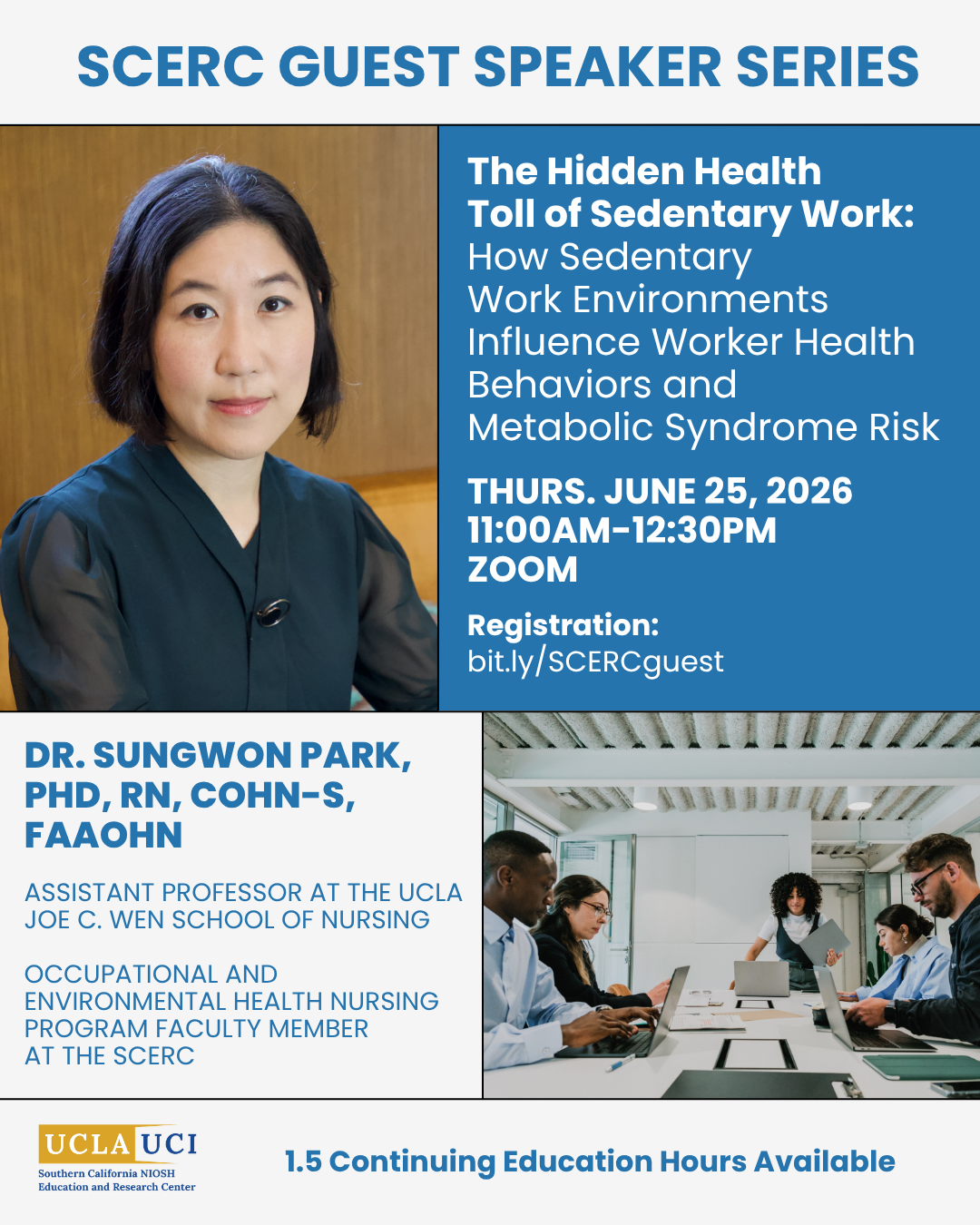
Presentation Overview Dr. Park will discusses how sedentary work has been defined and explores current trends in sedentary work. She addresses how the increasingly blurred boundary between work and personal life affects workers' behavioral changes and their risk of metabolic syndrome, a cluster of chronic conditions. Drawing from systematic reviews on working populations, she presents several examples highlighting health behaviors and metabolic syndrome risks among workers within sedentary work contexts. She then explores how different work settings and environments can shape future research directions and offer practical implications for occupational and environmental health (OEH) practitioners in addressing worker health. |
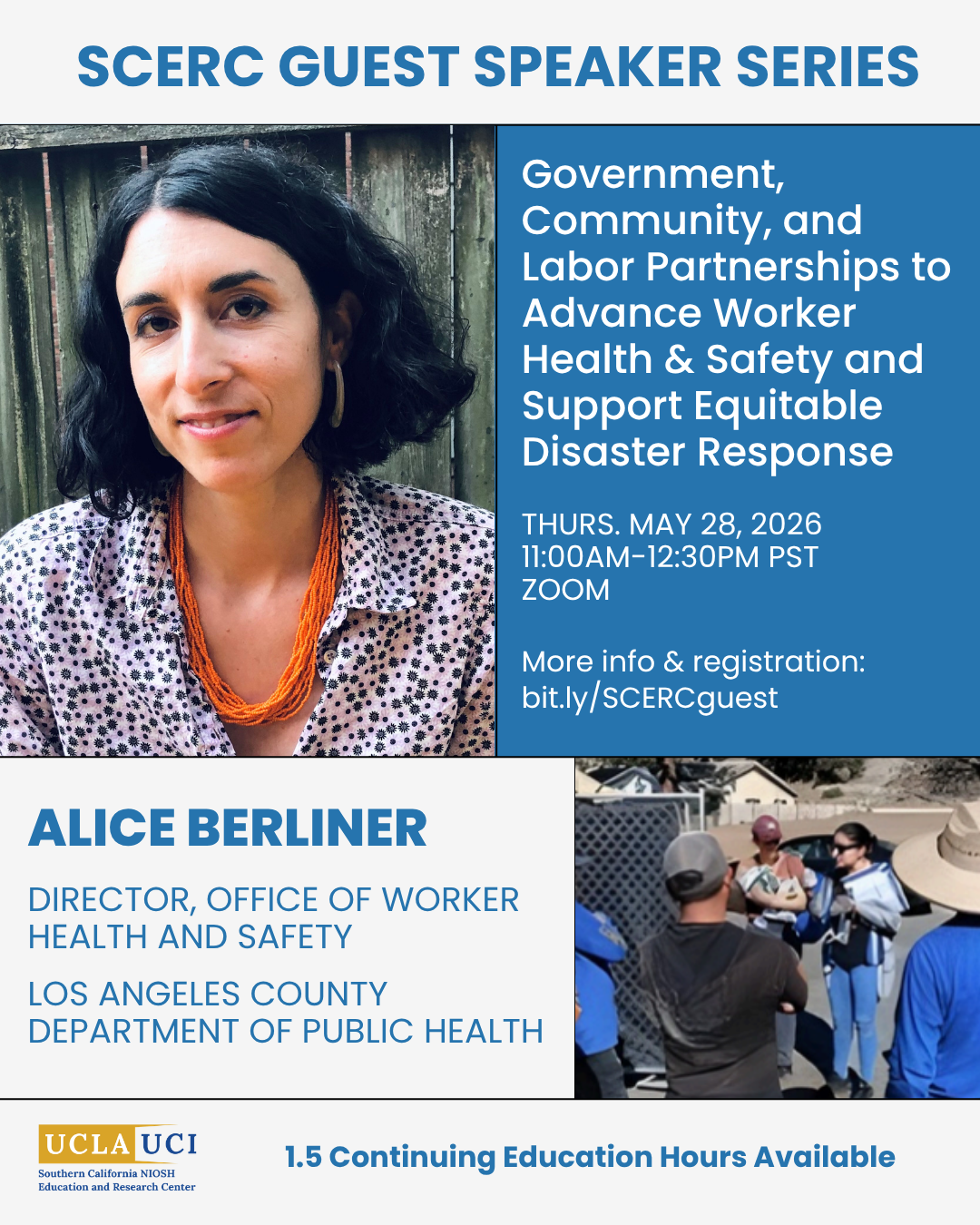
Presentation Overview This presentation explores the intersection between public health and working conditions impacting low-wage and high hazard industries, and share partnership models between LA County Department of Public Health and worker and community-based organizations to advance workplace safe and healthy, and support equitable disaster response. Examples from the COVID-19 pandemic and the 2025 LA Fires help illustrate the important role worker and community-based organizations play as trusted messengers in getting timely resources and information out to workers. |
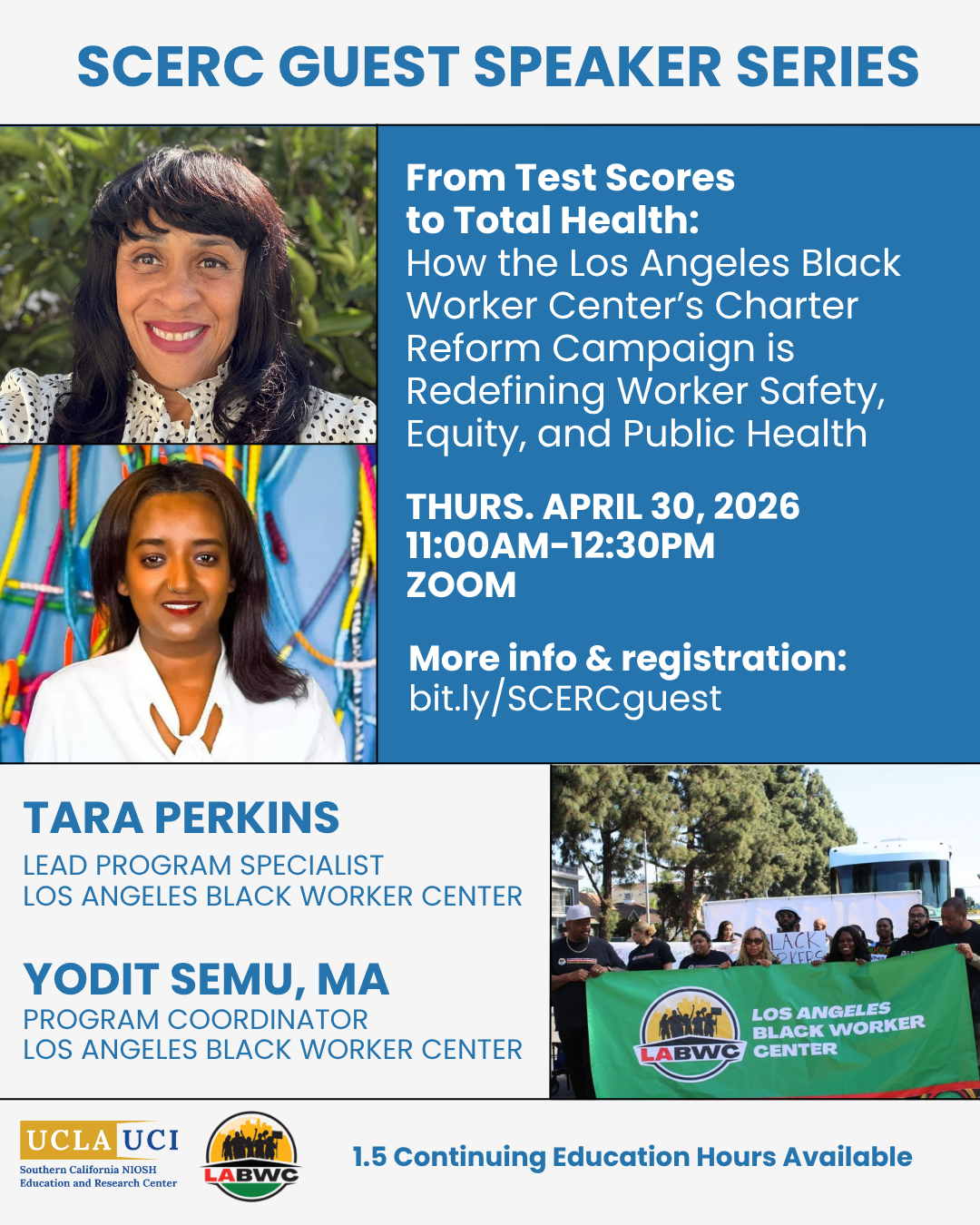
Presentation Overview What if the most dangerous hazard a worker faces isn't just a toxic chemical or an unguarded machine—but a civil service exam and outdated hiring practices? In this webinar, Tara Perkins and Yodit Semu from the Los Angeles Black Worker Center (LABWC) argue that employment policies are fundamentally health interventions. Drawing directly from our 1,000 Strong Campaign and our Ready to Work (R2W) program—which provides essential skill training and industry-specific mentorship to Black workers—we will show how discriminatory hiring practices, including the civil service exam, operate as structural and psychosocial hazards for Black workers in Los Angeles. |
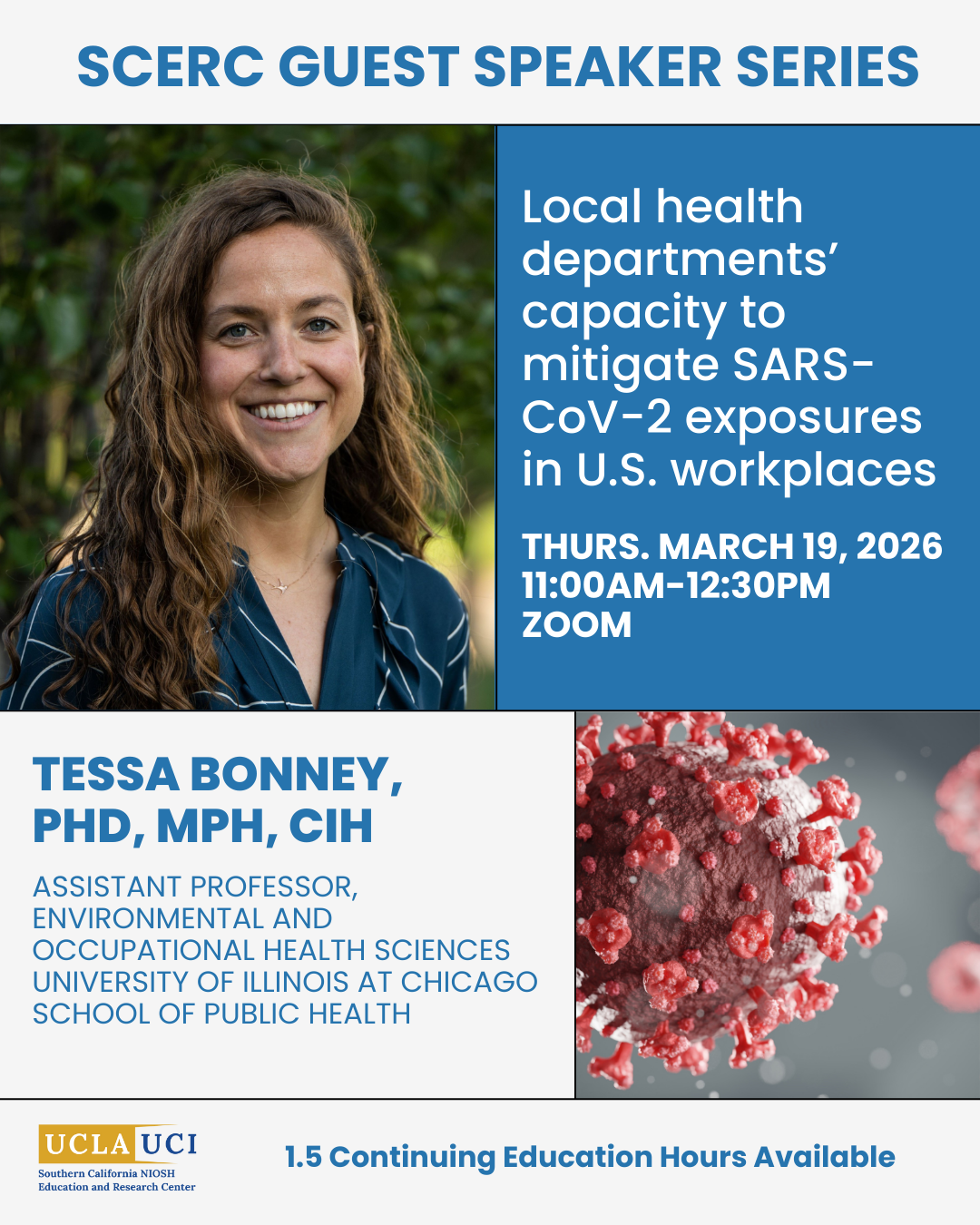
Presentation Overview Dr. Bonney, an Assistant Professor in the Division of Environmental and Occupational Health Sciences at the University of Illinois Chicago, discussed findings from a national study examining how local health departments (LHDs) across the United States engaged with workplaces during the COVID-19 pandemic, highlighting the barriers and facilitators that shaped their ability to investigate outbreaks and support mitigation efforts. Her presentation covered the complex landscape of authority for regulating infectious hazards in U.S. workplaces, a landscape in which public health agencies, employers, and OSHA each play distinct roles that do not always align neatly during rapidly evolving emergencies. LHD capacities, such as staffing, occupational health expertise, relationships with employers, and resource constraints, influenced real-world responses to COVID-19 in diverse jurisdictions. LHDs’ capacities have implications for ongoing challenges in protecting workers from airborne infectious diseases, and Dr. Bonney’s study highlights opportunities to strengthen cross-sector coordination, improve surveillance and response capabilities, and build more resilient occupational and public health systems for future pandemics. |
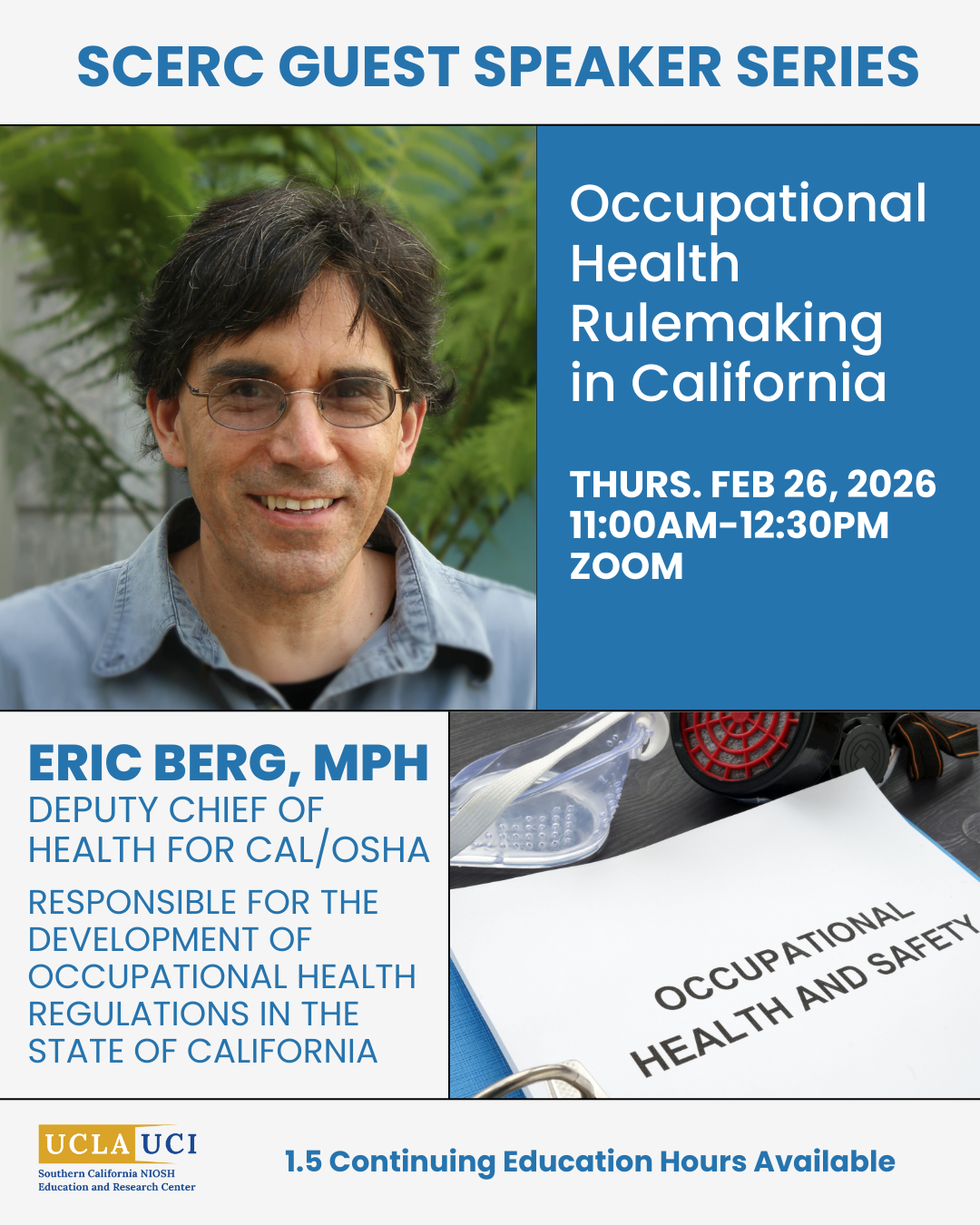
February 26, 2026: Occupational Health Rulemaking in California Presentation Overview Eric Berg, Deputy Chief of Health for Cal/OSHA, presented on recently enacted and upcoming occupational health worker protections in the state of California. |
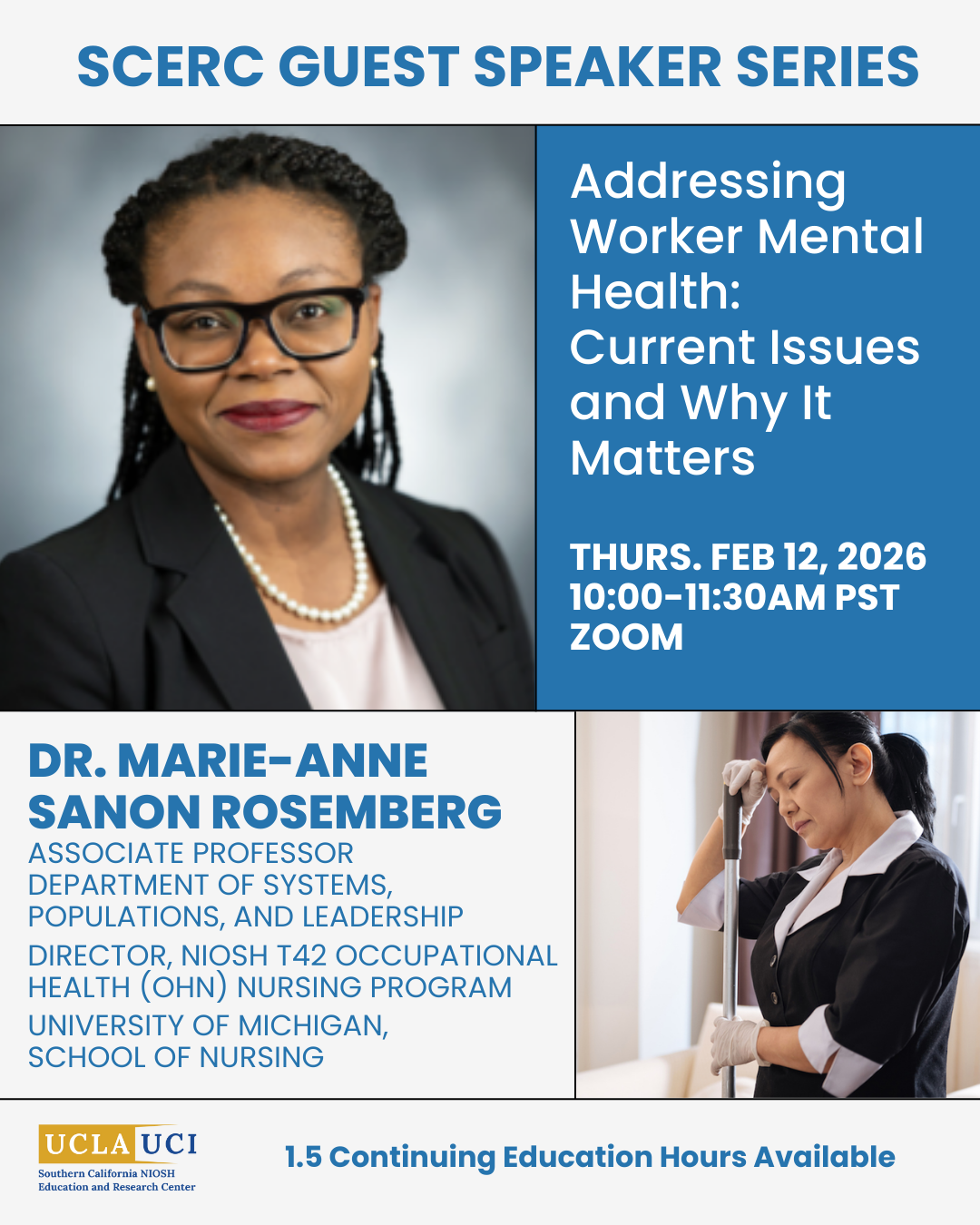
February 12, 2026: Addressing Worker Mental Health: Current Issues and Why It Matters Presentation Overview Dr. Rosemberg, an Associate Professor and Director of the Occupational Health Nursing Program at the University of Michigan School of Nursing, presented on the current state of worker mental health and its impact at both the individual and organizational levels. A case example was included to illustrate the urgency of this issue in real-world work environments. The session concluded with examples of existing programs to support the mental health and wellbeing of workers and a call to action for current and future occupational health professionals. |
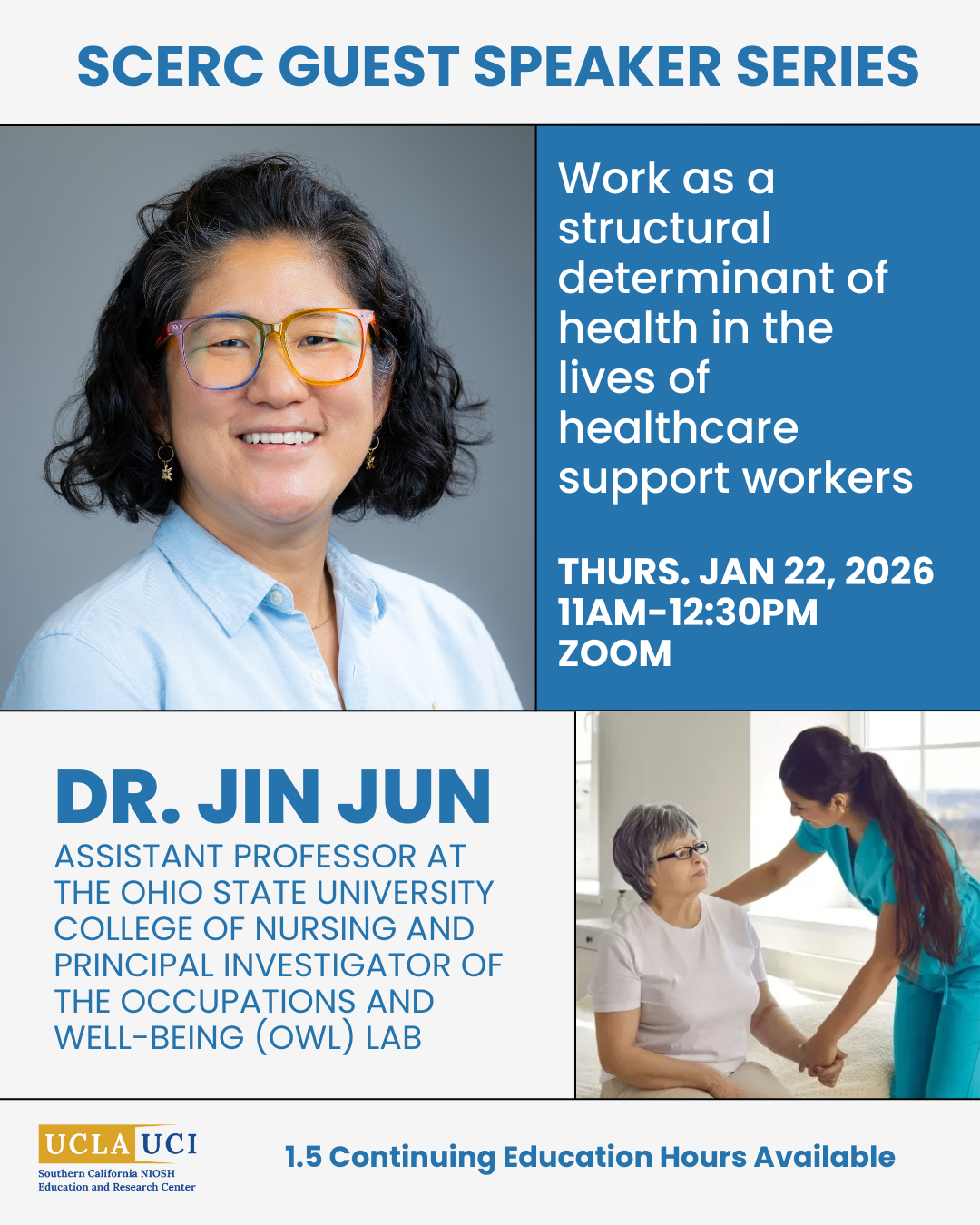
Presentation Overview Dr. Jin Jun, Assistant Professor at The Ohio State University College of Nursing and the Principal Investigator the Occupations and Well-being (OWL) lab, presented on how employment conditions, such as wages, scheduling, and workplace policies, function as structural determinants of health for healthcare support workers (e.g., nursing assistants). Her research examines the ways systemic factors shape physical, mental, and social well-being, highlighting disparities and vulnerabilities within this essential workforce. The session discussed implications for health equity and proposed strategies to address structural barriers through policy and organizational change. |